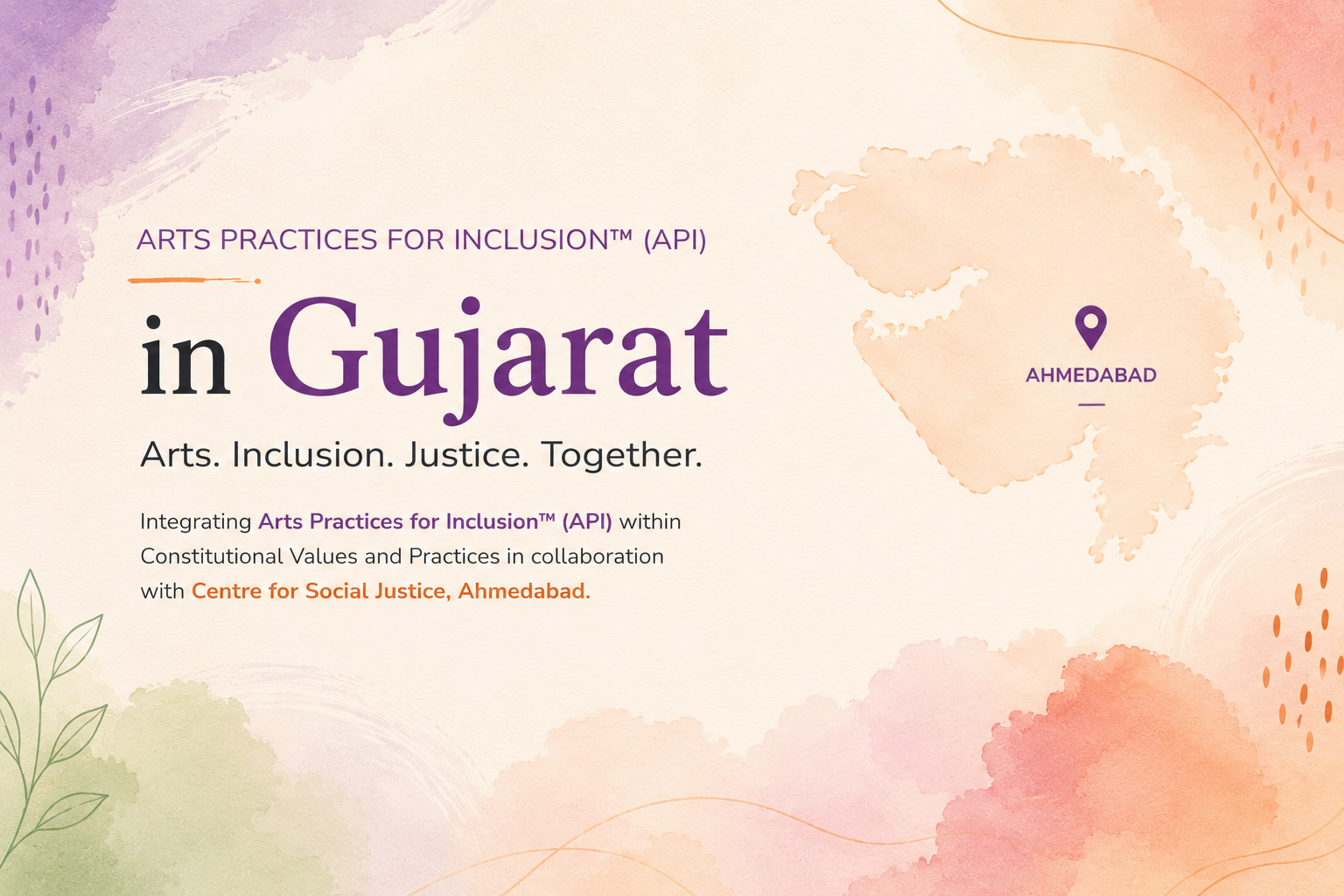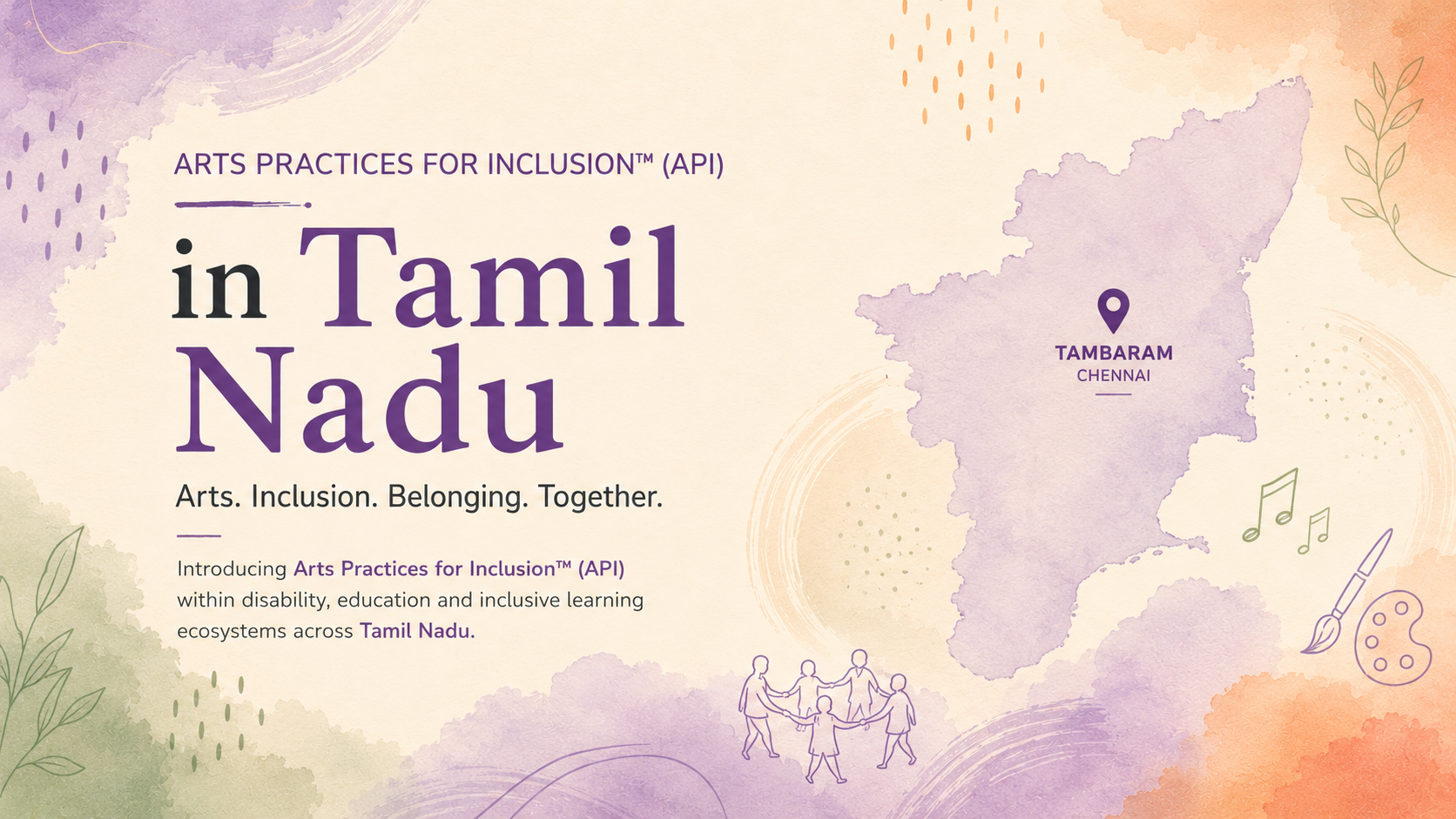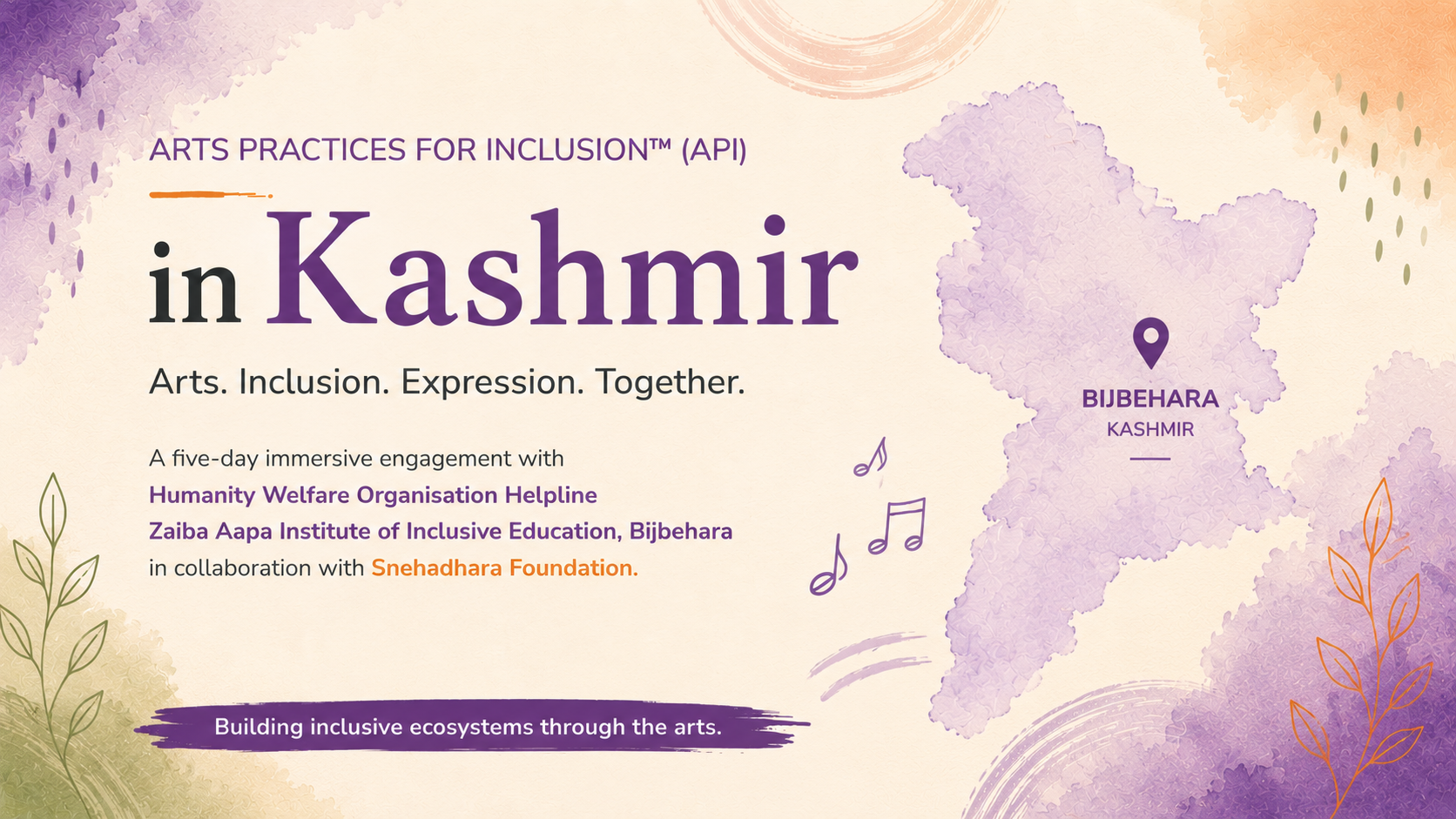
Arts Practices for Inclusion™ (API)
A Growing Ecosystem of Inclusive Practice
At the heart of Arts Practices for Inclusion™ (API) lies a simple yet transformative understanding — that the arts are not an “activity” added onto human development, but a way of being, relating, learning, expressing, healing, and building community. Through movement, music, theatre, storytelling, visual arts, play, rhythm, and embodied expression, API creates spaces of dignity, participation, connection, and inclusion across diverse human contexts.
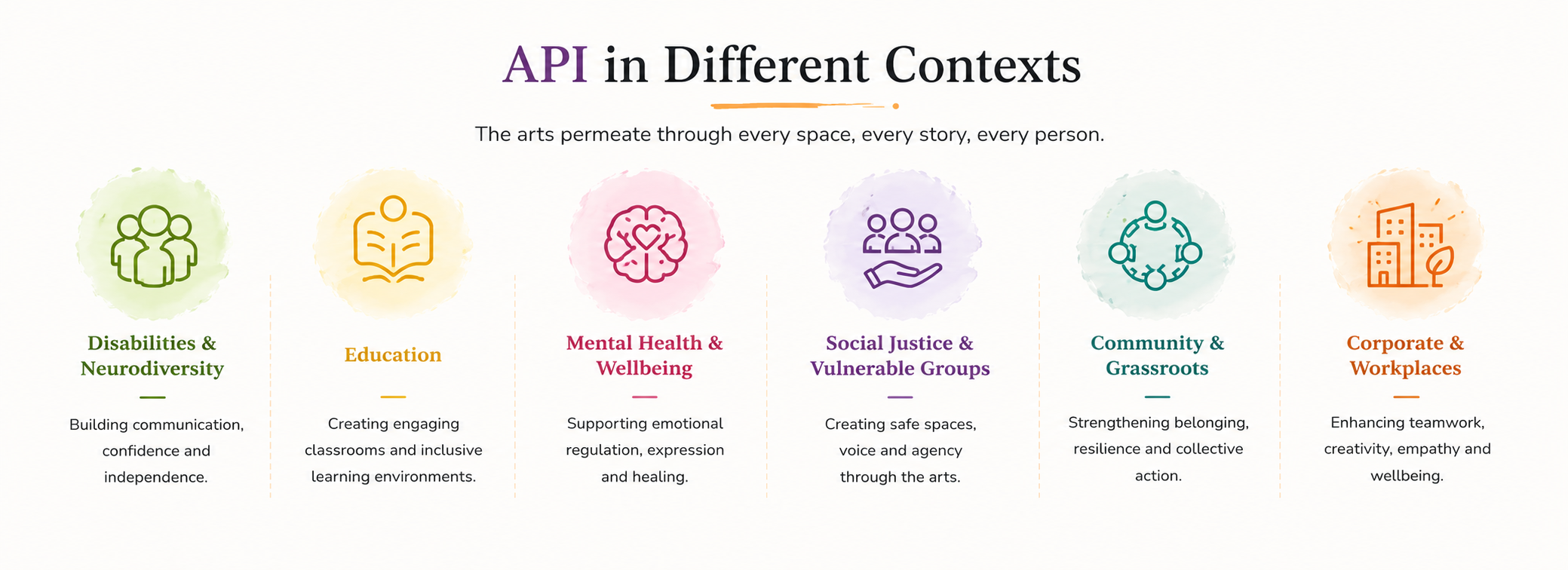
What began within the space of disability and neurodiversity has gradually evolved into a deeply cross-sectoral practice that now engages with education, mental health, social justice, community development, elder care, wellbeing, and organisational culture. Across each of these settings, the arts emerge as a shared language — one that transcends hierarchy, invites participation beyond words, and enables people to encounter themselves and one another differently.
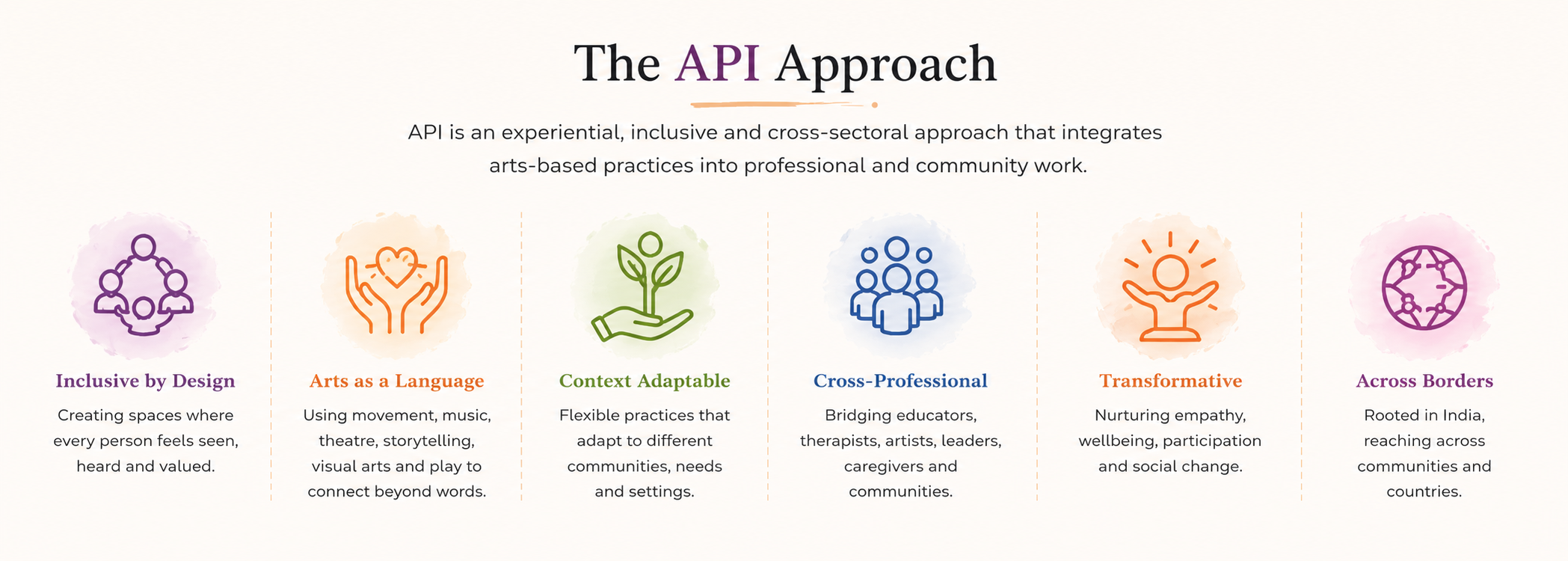
API is an experiential, inclusive, and cross-sectoral approach that integrates arts-based practices into professional and community spaces. Using movement, music, theatre, storytelling, play, and visual arts, API creates environments of participation, connection, and belonging. The approach adapts fluidly across education, disability, mental health, social justice, community, and workplace contexts.
At its heart, API positions the arts as a shared human language that nurtures empathy, wellbeing, expression, and collective transformation.
As API continues to grow, there is an increasing need to make these practices more accessible, adaptable, and transferable across professions and settings.
One important direction in this scaling process is the development of introductory API programmes and short-term courses — offered both online and offline in different contexts.
Towards a Larger Movement of Inclusion
In many ways, the scaling of Arts Practices for Inclusion™ (API) is also the scaling of a new imagination of inclusion itself.
It moves inclusion beyond accommodation and policy alone, and into the realm of lived experience, relationship, participation, creativity, and collective humanity. Through the arts, API opens up possibilities for people across professions, identities, abilities, and communities to encounter one another with greater presence, dignity, care, and connection.
As more practitioners and institutions engage with these approaches, API continues to grow not just as a methodology, but as a movement — one that positions the arts as a central language for building more inclusive, compassionate, and interconnected societies across India and beyond.